Mental Health App
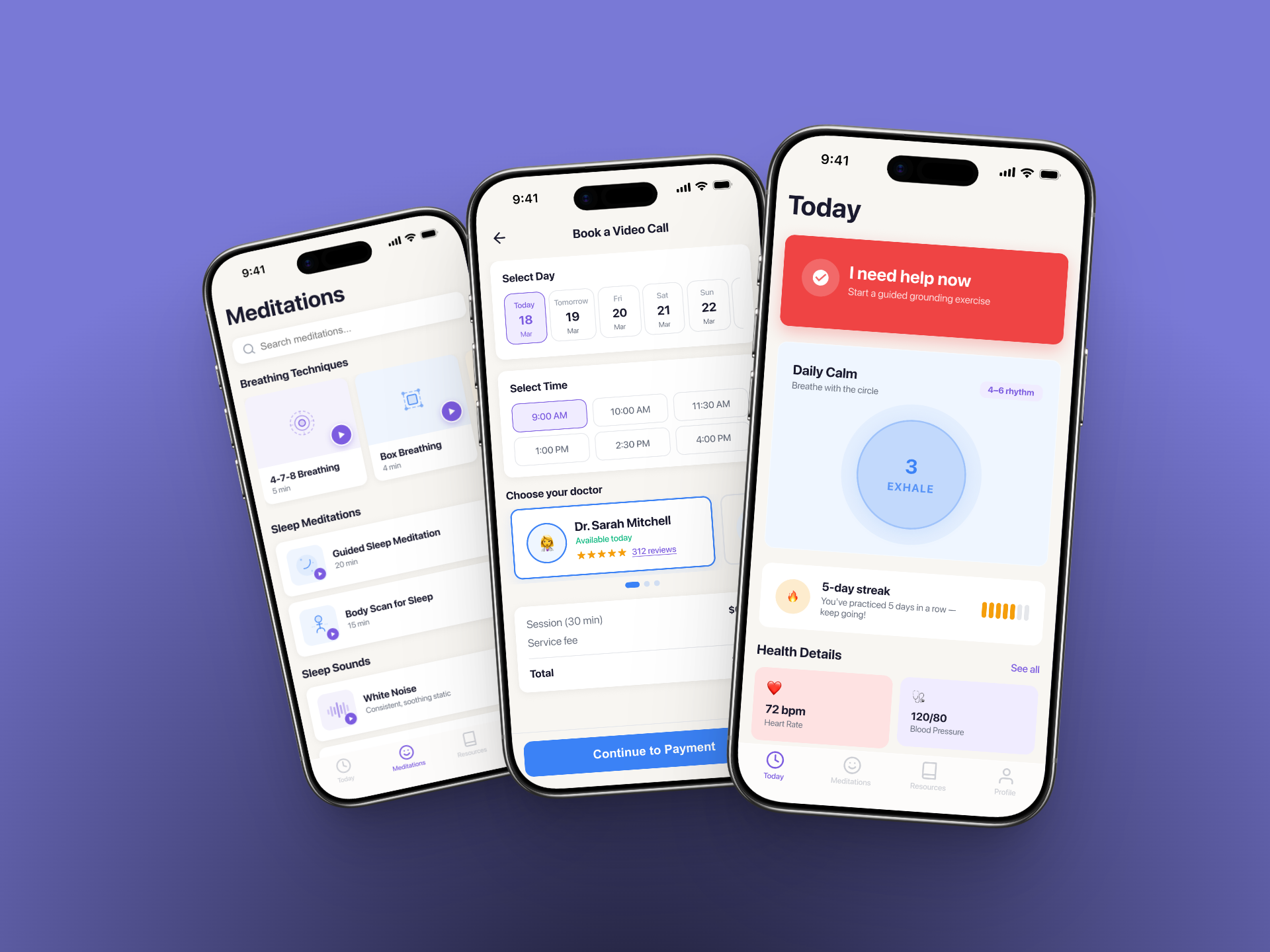
Learn how to recognize panic attacks and find ways to cope with them through a mobile app
Learn how to recognize panic attacks and find ways to cope with them through a mobile app
People experiencing panic attacks often struggle to understand what is happening and how to respond. This project focused on designing a mobile app from scratch that provides immediate guidance and practical coping tools during moments of anxiety.
…help users recognize the signs of a panic attack when it happens?
…guide users through calming techniques during a panic attack?
…make coping tools simple and accessible in moments of high stress?
…help users feel more in control of their anxiety over time?
Most existing panic and anxiety apps focus on symptom tracking, guided meditations, or coping exercises. None provide access to a licensed psychotherapist after an episode, when users are cognitively able to seek guidance and process what happened.
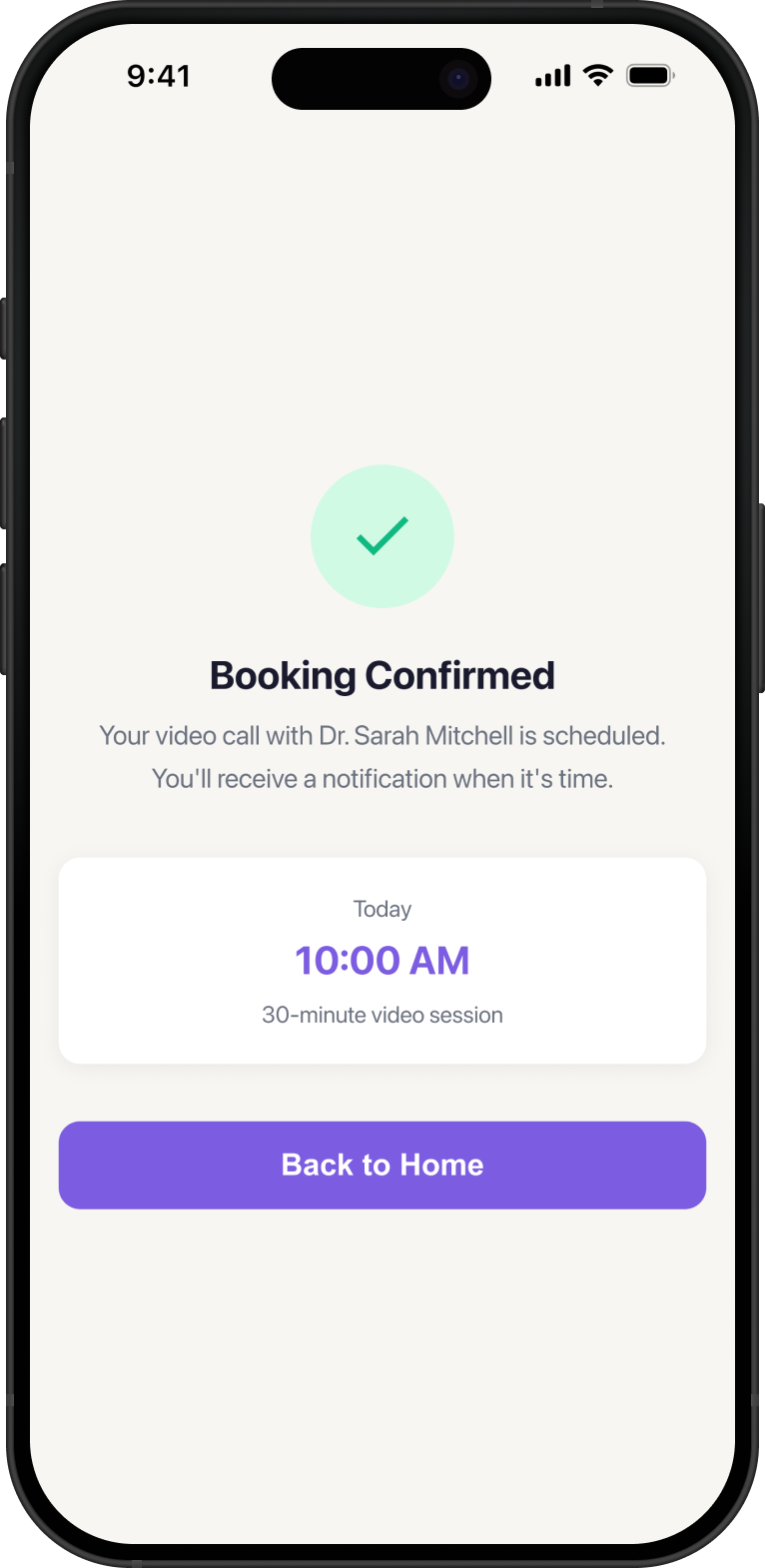
Integrate a feature that allows users to schedule or initiate a call with a licensed psychotherapist after a panic episode. This ensures users can access professional guidance when they are able to think clearly, helping them process the episode and develop coping strategies.
| Key Insights | Design Opportunities |
|---|---|
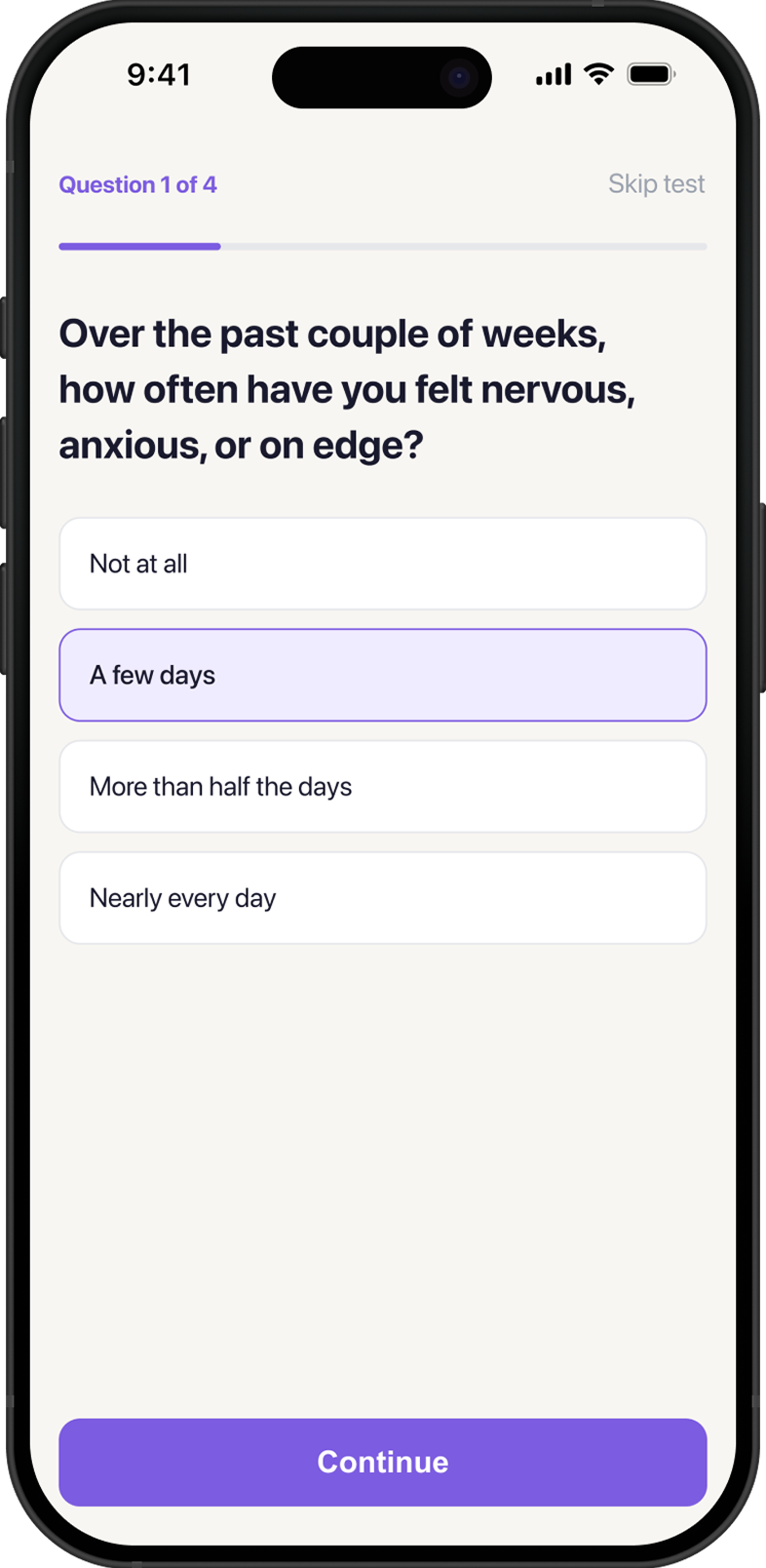
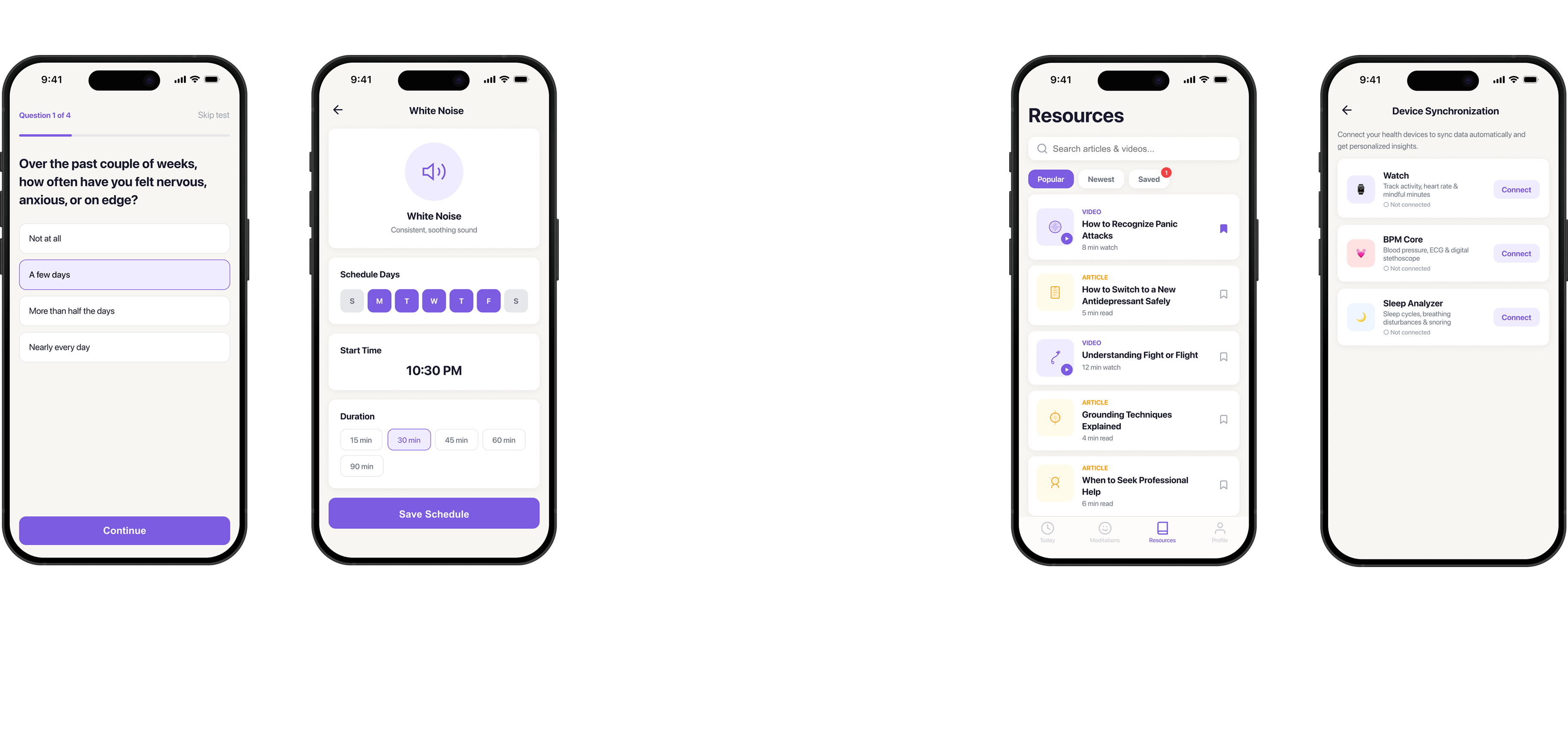
| Many people experience panic attacks but don't recognize them | Include a test to help users understand whether they might be experiencing panic attacks |
| Many don't know how to use breathing techniques to calm themselves down | Provide a guided grounding exercise that users can follow during an attack |
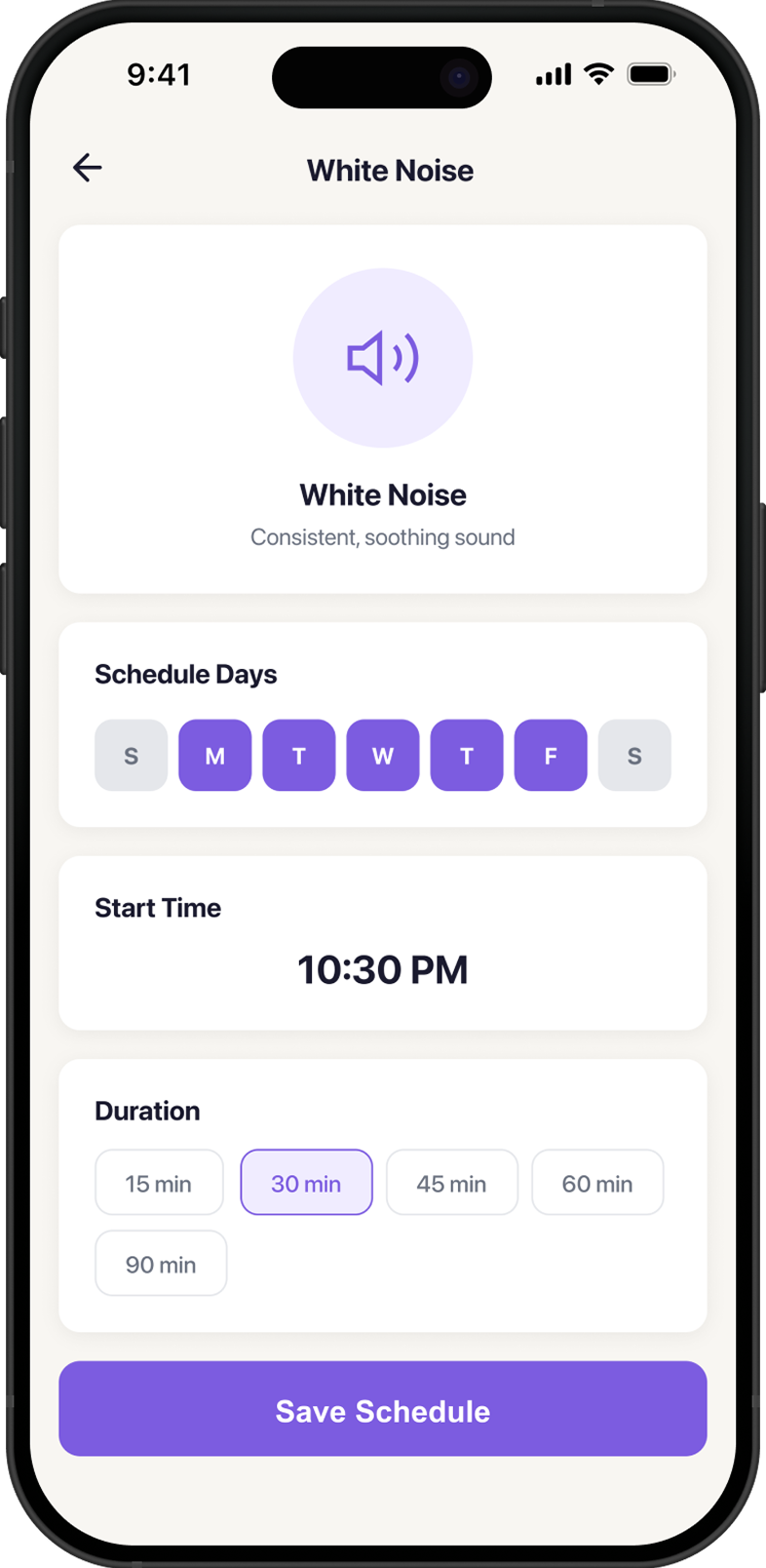
| Many report struggling with sleep | Include white noise sounds to help users relax and improve sleep quality |
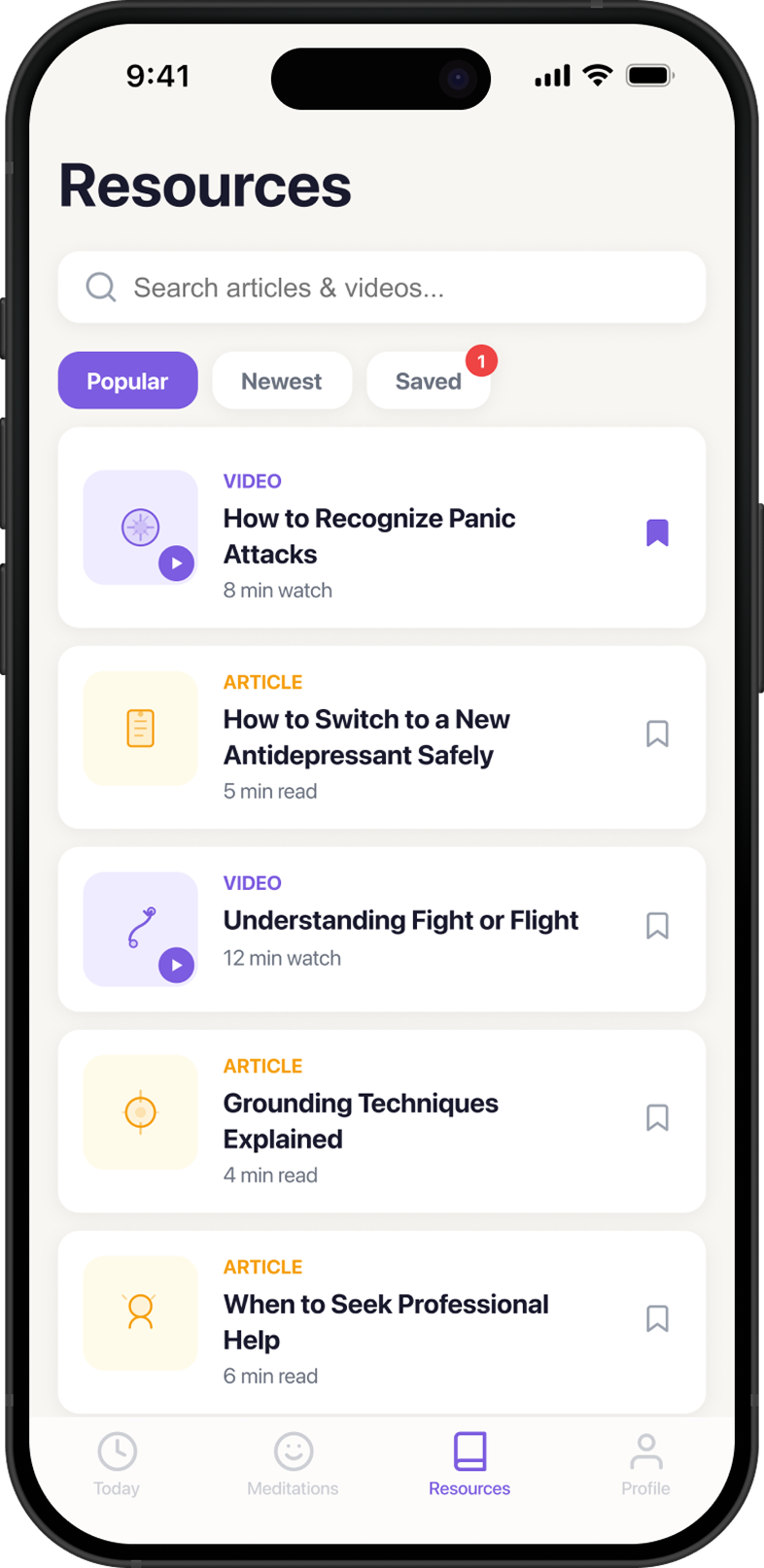
| Many users don't talk about panic attacks due to shame, fear of being misunderstood, or confusion about the experience | Create features and educational content that help normalize the experience |
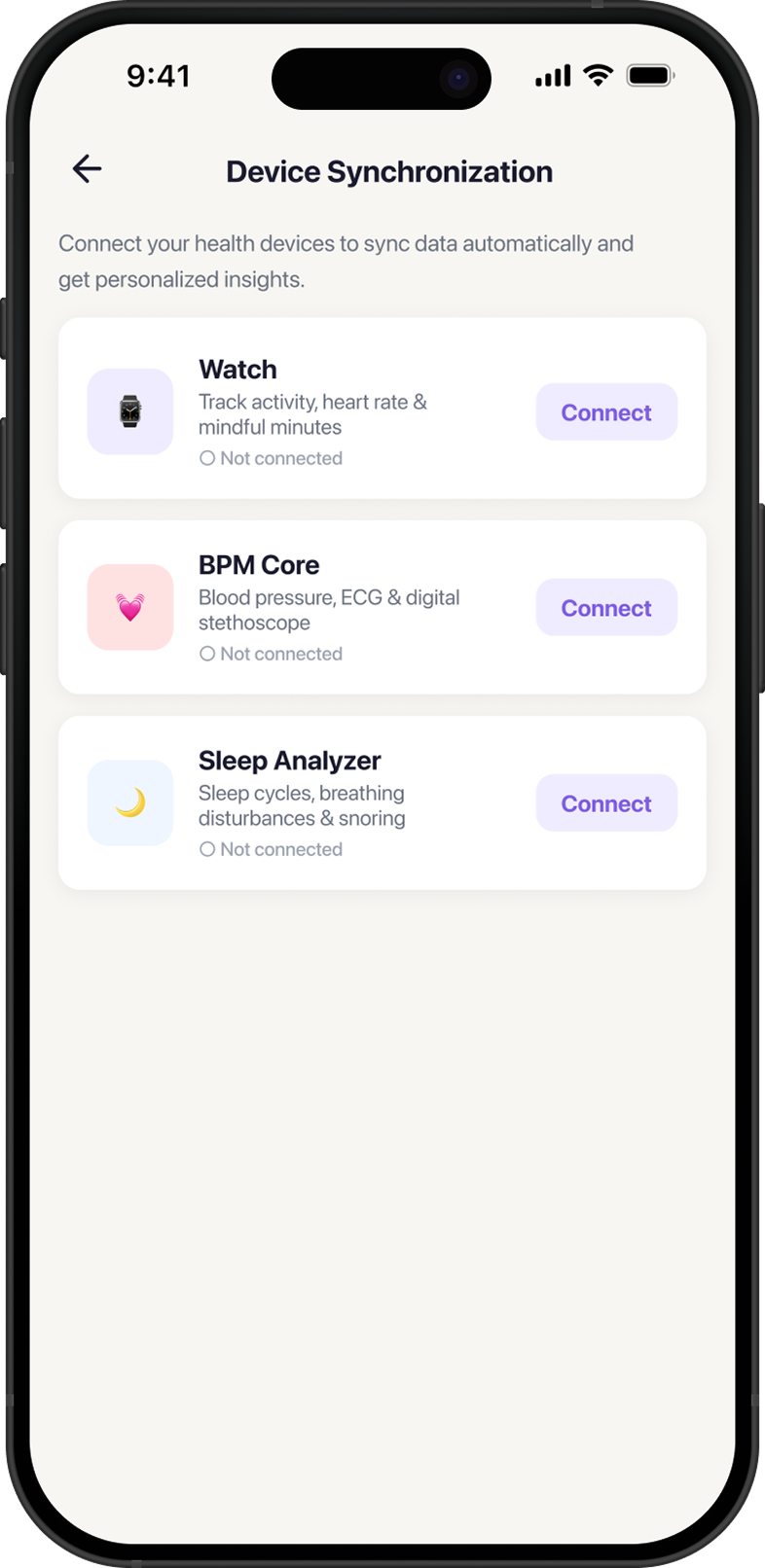
| Many people experience physiological symptoms during panic attacks, such as increased heart rate and blood pressure | The app integrates with wearables to track physiological signals and help identify panic triggers |
Finding
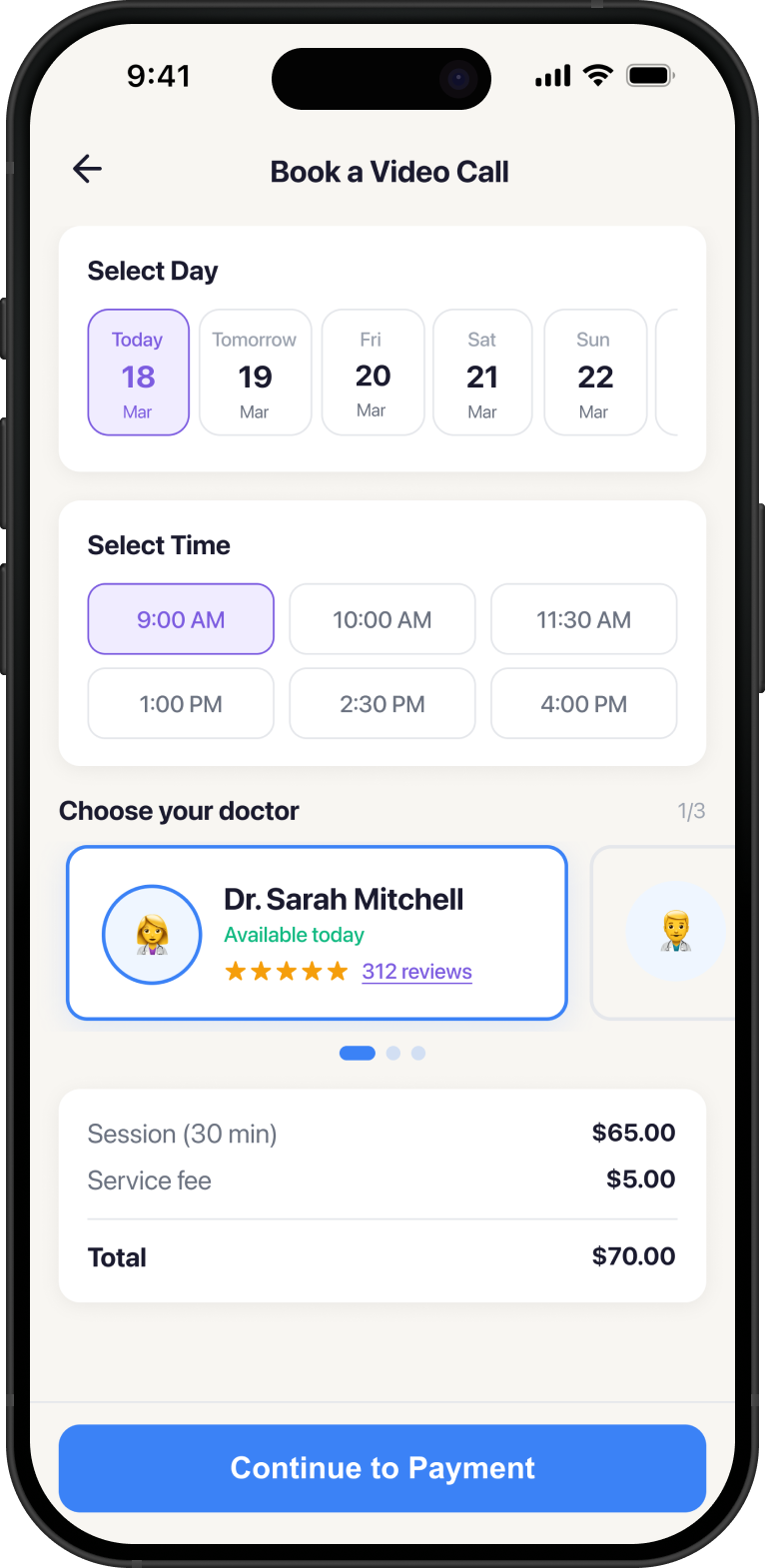
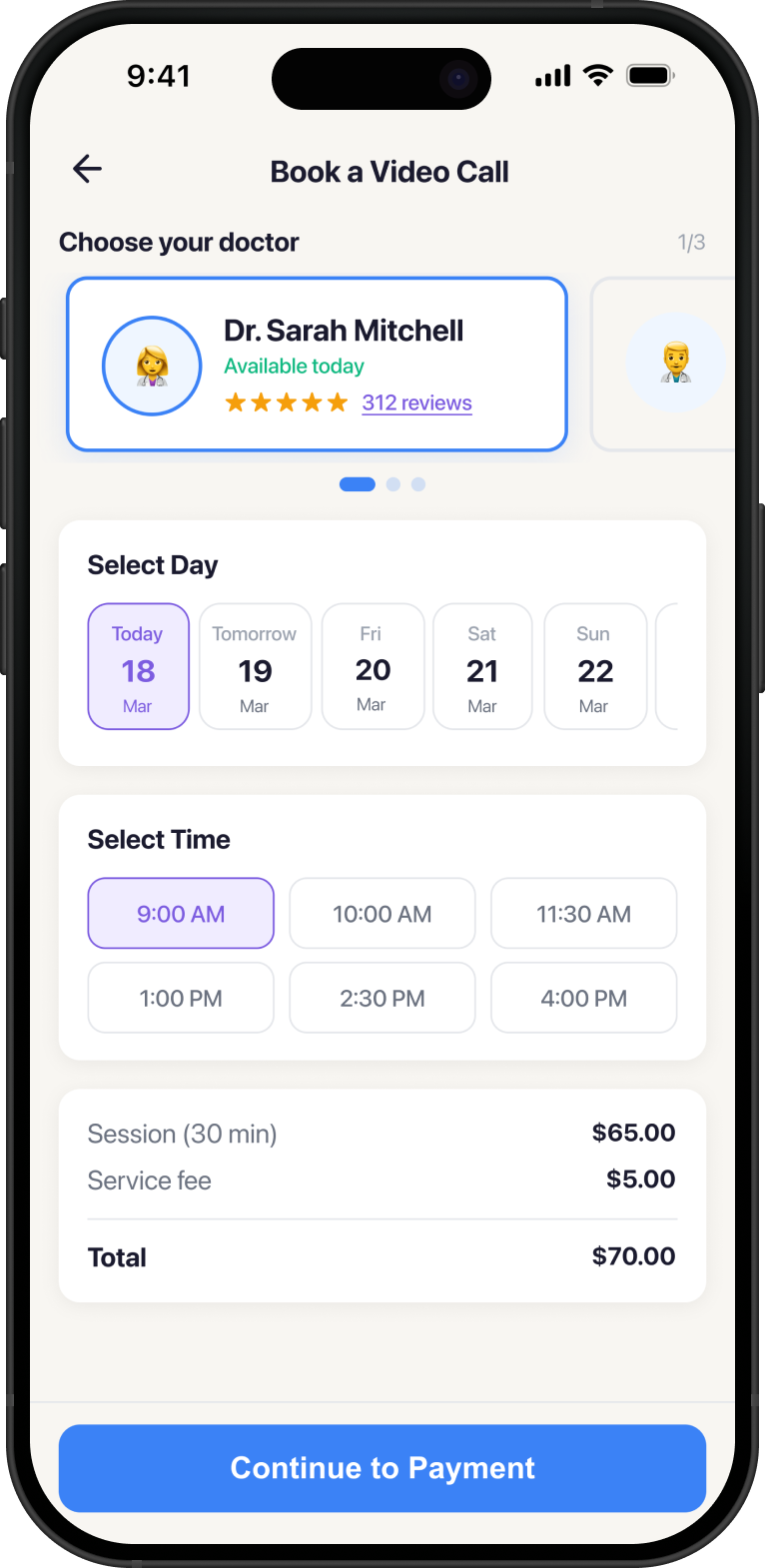
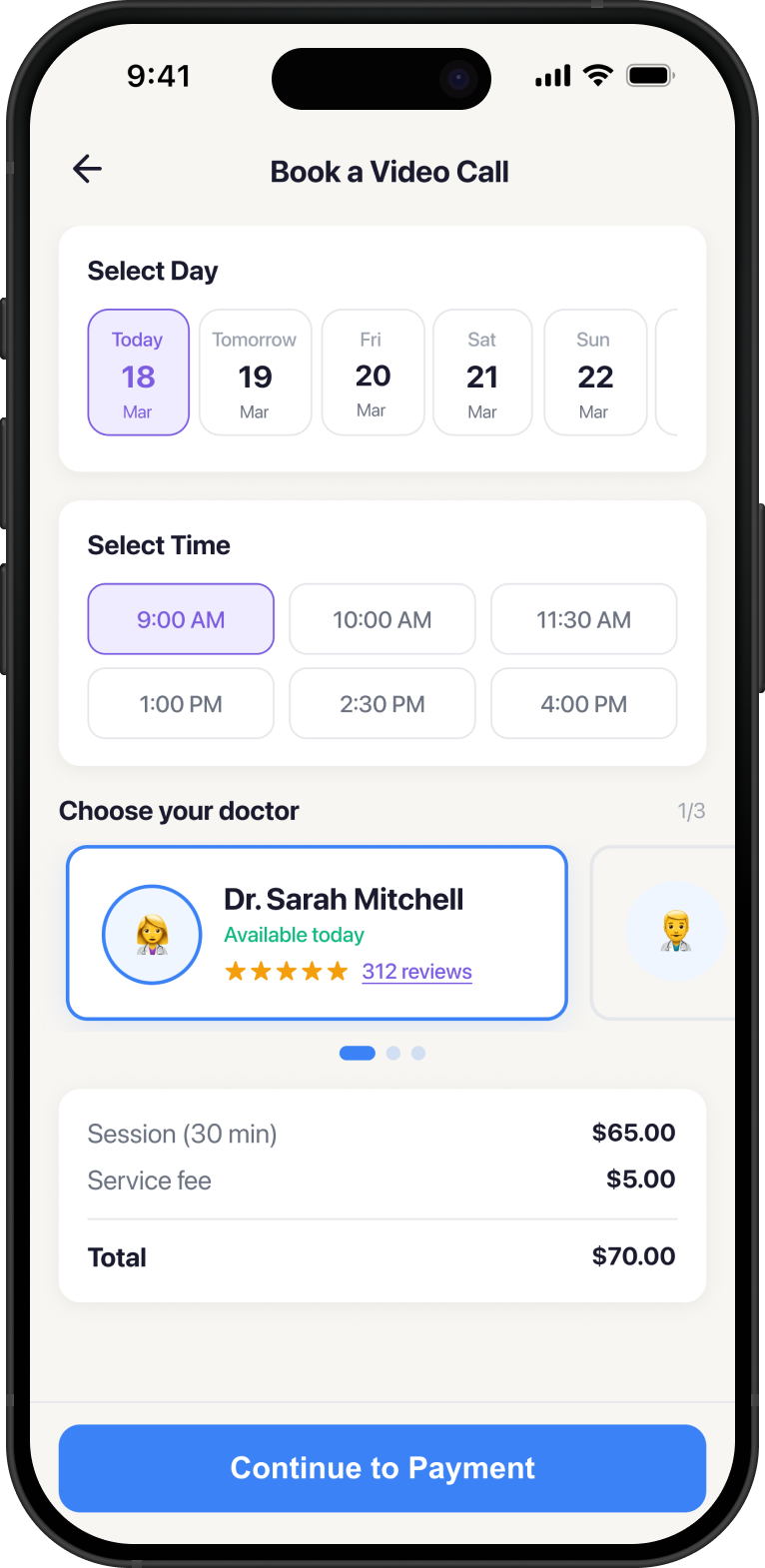
In the initial booking flow, users had to choose a psychotherapist first, and only then select an available date and time.
Why it matters
During usability testing, participants said this approach felt inconvenient because they primarily wanted to see the nearest available appointment first. When experiencing anxiety or panic symptoms, users prefer to schedule help as quickly as possible.
Design decision
The booking flow was redesigned to prioritize the earliest available date and time, enabling users to quickly find the closest appointment before selecting a suitable specialist.
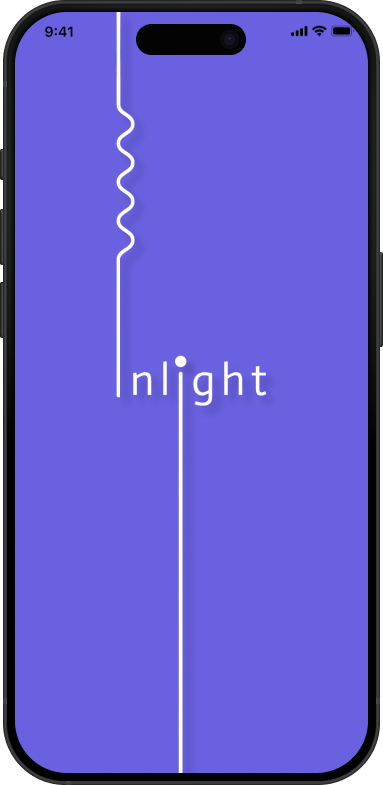
A simple mark built around the idea of movement and regulation.
The soft wave integrated into the vertical line represents neural activity and the invisible patterns of the mind. Its rhythm suggests both the intensity of anxious thoughts and the possibility of returning to balance.
As the line continues, it gradually becomes still — a subtle visual metaphor for finding calm amidst internal turbulence.
No medical symbols, no clichés. Just a quiet reminder that even the strongest waves eventually settle.
One of the main challenges was "How to recognize panic attacks and learn practical techniques to manage them?"
Developed a clickable prototype to validate the concept and refine key interaction flows, using AI-assisted tools to speed up implementation.
I used AI-assisted prototyping to bring the concept to life rapidly — the UX strategy, user flows, interface design, and branding decisions behind each screen are my own. This approach allowed me to test and iterate in days rather than weeks.
Test completion rate
Panic button completion rate
Discussion call booking rate
Educational content engagement
At the beginning of the project, I assumed that the main solution for panic attacks would be video calls with a psychotherapist. However, user research revealed an important insight: during a panic attack, people often can't think clearly or make complex decisions. What they need most is immediate support that helps them calm down quickly.
As a result, the app's core feature became instant grounding techniques that users can access as soon as a panic attack starts. The video call with a psychotherapist remained part of the solution, but it was repositioned as support for situations when the panic attack doesn't pass or when users need guidance in the long term.

Feel free to reach out — I aim to reply within 24 hours.